
I used to look at my analytics dashboard and think, “There’s no way paid search is really driving all of this.” This was years ago when I was running a campaign that used channels. It made me want to learn more about marketing mix modeling.
In this post, I will break down what marketing mix modeling is, how marketing mix modeling works, and why marketing mix modeling’s a way to measure how well your marketing is doing across every channel. Not just the channel that gets credit for the click.
What Is Marketing Mix Modeling(MMM)
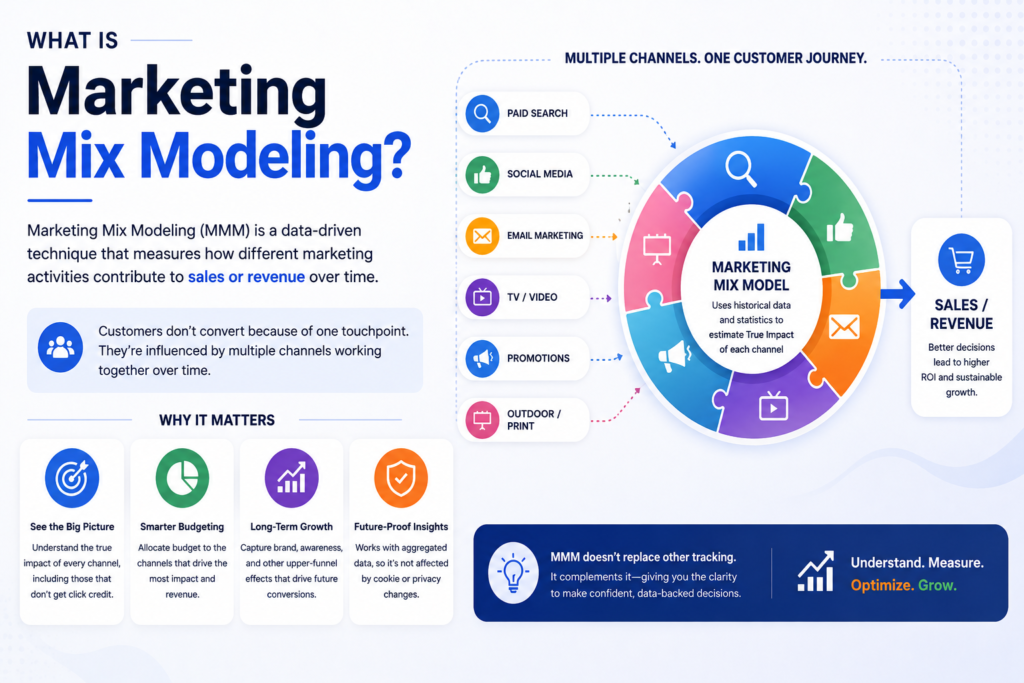
Marketing mix modeling is a way to measure how different marketing activities, like paid search, social media, email, TV, and promotions, contribute to sales or revenue. Instead of just looking at clicks, MMM uses historical data and statistics to estimate the real impact of each channel. This includes channels that influence customers long before they buy something. The main idea behind marketing mix modeling is that customers don’t buy something because of one thing. They buy because of influences that work together over time. MMM tries to understand this mix and give credit where it’s due to marketing mix modeling.
A Real Marketing Mix Modeling Example That Changed How I Think About Attribution
When I first started working with -channel marketing campaigns I had a client who thought paid search was the best way to get people to buy their stuff because it seemed to work really well in their reports.. Then we did a Marketing Mix Modeling analysis and found out that video and display campaigns were actually really important too. These campaigns were helping people learn about the brand and think about buying from them. They were not getting the credit they deserved because people would search for the brand later and buy from them through paid search.
The Marketing Mix Modeling results showed us that paid search was usually the thing people did before buying, not the thing that made them want to buy in the first place. This helped us see how all the different marketing channels worked together of just looking at each one by itself.
So we decided to use some of the money we were spending on paid search for video and display campaigns instead.. It worked really well. Over the few months the client made more money from their marketing their campaigns worked better and they were able to use their money more wisely. This showed me that Marketing Mix Modeling can help us see what is really working in our marketing, which’s not always easy to figure out. It helps businesses make decisions, about how to spend their money on marketing.
Marketing Mix Modelling vs Traditional Ad Tracking
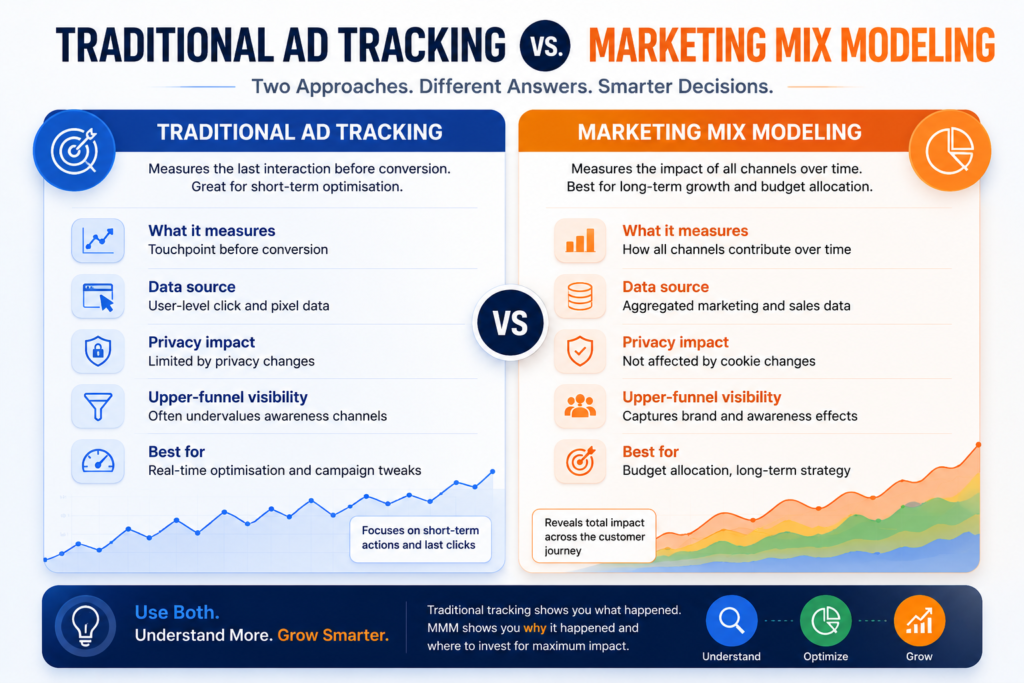
People often ask me about the difference between marketing mix modelling and traditional ad tracking. Let me compare them directly.
Marketing Mix Modelling:
- What it measures: How all channels contribute over time using MMM.
- Data source: Aggregated marketing and sales data.
- Privacy impact: Not affected by cookie changes.
- Upper-funnel visibility: Captures brand and awareness effects.
- Best for: Budget allocation, long-term strategy.
Traditional Ad Tracking:
- What it measures: Touchpoint before conversion.
- Data source: User-level click and pixel data.
- Privacy impact: Limited by privacy changes.
- Upper-funnel visibility: Often undervalues awareness channels.
- Best for: Real-time optimisation and campaign tweaks.
Neither approach is wrong. They answer questions. Traditional tracking is great for making decisions. MMM is better for understanding how to measure marketing across channels and make budget decisions with confidence using MMM.
How I Approach a Marketing Mix Modeling Analysis
Here’s how I do a marketing mix modeling analysis:
- Gather Data
We need to look at what happened in the past with our marketing spending, sales, promotions, prices, the mix of products we sell and how things change during different times of the year. We have to get all the information for the Marketing Mix Modeling.
- Prepare the data
It is really important to organize and summarize all the information we collected. We have to make sure the data is good and fix any mistakes. When the data is ready the Marketing Mix Modeling can give us reliable information about our marketing.
- Construct the response
The Marketing Mix Modeling uses math to look at the information we collected. It helps us understand how different marketing channels affect our sales. It also looks at things outside of our marketing that can influence what our customers do.
- Test and validate
We can check if the Marketing Mix Modeling results are correct by comparing them to what happened in our business and what we spent on marketing. This helps us make sure the information is accurate and gives us a basis for making business decisions about the Marketing Mix Modeling.
- Interpret the results
We have to look at the Marketing Mix Modeling results and find out what changes we need to make to our marketing channels. This helps us decide what to do how changes in our marketing spending will affect our sales and which marketing channels are working well and which are not.
- Deliver recommendations
We need to use what we learned from the Marketing Mix Modeling to decide which marketing channels to use get a return on the money we spend on marketing and invest in the marketing channels that work best for us. The Marketing Mix Modeling helps us make decisions, about our marketing.
The Biggest Mistake I See With Marketing Mix Modeling
People often make a mistake when they use bad data for Marketing Mix Modeling. The thing is, Marketing Mix Modeling is only good if the data it is based on is good. If you do not think about things like when thingsre busy or slow promotions, how much things cost what other companies are doing or how the economy is doing then the model can give you wrong answers and you might make bad decisions about marketing.
Another mistake people make is wanting answers now. Marketing Mix Modeling is meant to show what happens over a time and how all the different marketing channels work together not how one campaign does. Companies should also make sure their data is good easy to understand and covers an enough time so they can really learn something from it.
My advice is to look at your data before you spend money on Marketing Mix Modeling. Make sure you know how much you are spending on marketing that your sales data is consistent and that you have old data to make a model that you can trust. If you take the time to get your data ready it will make a difference, in how good your results are. Marketing Mix Modeling will work better if you have data.
When Marketing Mix Modeling Is Not the Right Fit
MMM is not a solution for every company. It works best for companies that have a marketing budget use advertising channels and have lots of past data to analyze. This helps them find patterns over time.
Companies just starting out don’t have money for marketing. They often don’t track their marketing efforts. May not have enough data to get good results. Without data MMM can lead to ideas and poor spending decisions.
In these cases simpler tools are often a choice.
- Platform reports
- Google Analytics
- Campaign performance metrics
can give us ideas about which marketing efforts are working well and driving traffic leads and sales. These tools are easy to use and don’t need data, like MMM.
As a company grows and starts collecting data on marketing and sales over time it becomes better able to use Marketing Mix Modeling. With data MMM can help figure out how online and offline marketing channels work together make the most of the budget predict results and support good long-term marketing decisions.
This way companies can start with analytics and gradually move to Marketing Mix Modeling when they have the data they need to get accurate and useful insights. Marketing Mix Modeling helps companies make the most of their marketing budget. Companies use Marketing Mix Modeling to make marketing decisions. MMM is a tool for companies to improve their marketing.
Key Takeaways of Marketing Mix Modeling
- Marketing Mix Modeling is an essential notion that helps understand the impact of different marketing sources on the given business. Unlike the last click attribution model, this one considers multiple aspects and factors to evaluate the performance of a company correctly. It allows the management to see the contribution of each source to the total revenue and analyze sales processes efficiently.
- The Marketing Mix Modeling approach should be applied primarily to measure and optimize the performance of marketing channels such as TV, video, display ads, and other traditional or non-digital sources. They can impact the audience in various ways, making it challenging to assess their effect on the customers’ purchasing behaviors accurately.
- To implement it correctly in a business, one needs historical data about past campaigns, which would allow the software to arrange and scan them properly. Additionally, the data should be high-quality and reliable to ensure accurate results and sufficient insights.
- Marketing Mix Modeling is a powerful but expensive tool, so it is not applicable to every company. If a business has limited resources, it should consider less resource-intensive but still effective approaches to marketing analytics before turning to this method.
- By using Marketing Mix Modeling, companies are not focused on the performance of a single channel; instead, they look at the whole system and analyze how different channels interact. As a result, business owners and managers can control the budget and get valuable information regarding the marketing process and customers’ preferences.
In a nutshell, Marketing Mix Modeling is a helpful approach but only as a part of a larger marketing analytics system. It should be complemented by other types of analyses, including attribution and web analytics, and should only be applied when there is a necessity and resources to do so.
CONCLUSION
Marketing Mix Modeling helps businesses see how all their online and offline marketing work together to get results. It looks at what happened in the past and shows which marketing channels really help sell things. This means businesses can make the most of their marketing money and get a return on investment.
Marketing Mix Modeling is not, for every business.. It is really useful when you have a good record of what you have done with marketing. When you use it with ways of looking at data it helps you make smart marketing decisions that are based on facts. This can help your business grow over time.